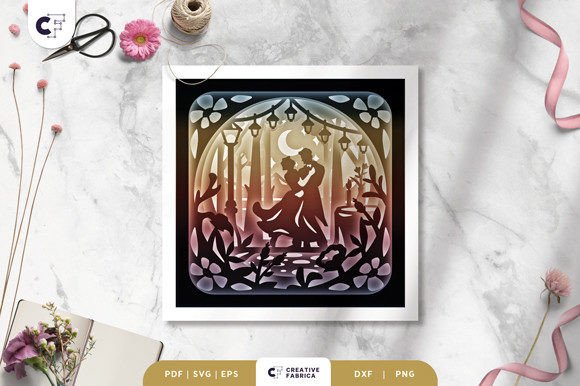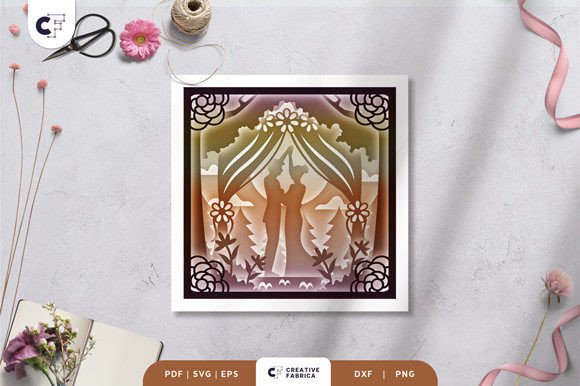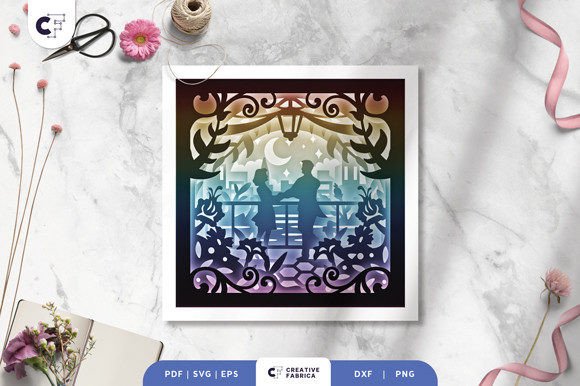
Dancing Couple in the Rooftop Shadow Box Review
As a designer who spends more time staring at stitch maps than most people spend watching television, I approach every new machine embroidery design with a mix of excitement and skepticism. We have all been there: you download a file that looks stunning on the screen, only to find it turns into a bird's nest of thread breaks and puckering once it hits the hoop. Today, I am putting the Dancing Couple in the Rooftop Shadow Box under the microscope. This isn't just a casual glance; this is a practical evaluation for those of us running craft businesses, selling on Etsy, or creating high-end personalized gifts where quality cannot be compromised.
My first impression of the Dancing Couple in the Rooftop Shadow Box was defined by its mood. There is a distinct romanticism here that feels less like a generic clipart image and more like a captured moment. The layout suggests intimacy, utilizing negative space effectively to create that "shadow box" depth even before a single needle touches the fabric. For an embroidery project, this visual personality is crucial. It tells a story. When I visualize this on a finished product, I don't just see threads; I see a narrative element that elevates a simple item into something memorable.
Real-World Application: From Screen to Stitch
To truly test the viability of this design, I imagined a specific real-life scenario. Picture a boutique owner preparing a custom order for a couple celebrating their first anniversary. They want a set of matching sweatshirt embroidery pieces or perhaps a decorative tote bag design for their weekend getaways. The Dancing Couple in the Rooftop Shadow Box fits this brief perfectly because it balances detail with readability.
In a commercial setting, clarity is king. If you are an Etsy seller or a small shop product creator, your customers need to understand the design instantly. This motif works exceptionally well on medium-weight fabrics like cotton twill or fleece. The interplay of light and dark areas within the design mimics the original concept of Table Decorations and 3D SVG layering, translating surprisingly well into thread. However, achieving this look requires careful attention to thread colors. You cannot simply rely on default settings; you must manually adjust contrasts to ensure the "shadow" effect doesn't get lost in the stitching.
Navigating Fabric Challenges and Hoop Constraints
While the aesthetic appeal is high, we must discuss where this design demands caution. Not every surface is ready for the Dancing Couple in the Rooftop Shadow Box. If you are working with stretchy fabrics like jersey knits for baby embroidery or athletic wear, the density of the fill areas could cause significant distortion. In these cases, a cut-away stabilizer is non-negotiable. Do not skimp here. The integrity of the silhouette depends on the fabric remaining taut and stable throughout the stitch-out.
Furthermore, consider the hoop size. While the design is square, which is generally friendly for standard hoops, the intricate details near the edges of the "rooftop" elements might push the limits of smaller 4x4 hoops. If you are attempting this on a curved surface like a cap, proceed with extreme care. The flat nature of the shadow box concept fights against the curvature of a hat brim. It is far better suited for flat applications like pillow covers, kitchen towels, or wall hangings where the geometry can remain true to the original digital embroidery file.
Another critical factor is stitch density. Designs that aim for a shadow-box effect often utilize dense satin stitches or tight fill patterns to create solid blocks of color. On thin fabrics, this can lead to "show-through" where the backing becomes visible, or worse, the fabric tears under the tension. Always test the design on a scrap piece of your actual production fabric first. Check how the satin stitch edges lay down and whether the running stitch outlines provide enough definition without overpowering the fills.
Enhancing Brand Value and Customer Trust
Why does any of this technical detail matter? Because as a creative entrepreneur, your reputation hinges on the finished product. Using a well-executed design like the Dancing Couple in the Rooftop Shadow Box directly impacts buyer engagement. When a customer receives a handmade product that features clean lines, proper coverage, and thoughtful composition, it builds trust. It signals professionalism.
Conversely, a poorly executed version of this design—with skipped stitches in the detailed corners or puckered fabric around the dancers—can damage your brand consistency. This design has the potential to be a standout asset in your portfolio, particularly for holiday embroidery gifts or wedding memorabilia. Its romantic theme makes it evergreen, suitable for Valentine's Day, anniversaries, or just general home decor. By treating it with the respect it deserves during the digitizing and stitching phase, you transform a simple embroidery file into a premium design asset.
Practical Notes for the Professional Maker
Before you commit this design to a client's garment, here are my top recommendations for ensuring success:
- Test on Scrap Fabric: Never run a new design directly on the final item. Use off-cuts of the exact same material to check for puckering and registration issues.
- Check Thread Contrast: Since this design relies on a "shadow" effect, ensure your thread palette has enough variation between light and dark tones to maintain depth.
- Review Stitch Density: If the design feels too heavy, consider editing the fill density in your software to reduce bulk, especially for custom apparel.
- Inspect Small Details: Zoom in on the tiny elements of the rooftop and the couple's figures. Ensure there are no micro-stitches that your machine might struggle to execute cleanly.
- Mockup Verification: Create black and white mockups to see if the design holds up without color reliance. This helps identify structural weaknesses in the layout.
- Licensing Confirmation: Always verify the license terms provided with the file. Ensure you are cleared for commercial embroidery if you plan to sell items featuring this design.
The description notes that this originates as a layered paper cutting template available in formats suitable for Table Decorations and 3D SVG projects. As embroiderers, we must bridge the gap between paper craft logic and thread logic. The Dancing Couple in the Rooftop Shadow Box offers a beautiful foundation, but it is your expertise in handling fabric texture, stabilizer choices, and machine tension that will determine its ultimate success. Whether you are creating an embroidered patch for a jacket or a centerpiece for a home, treat this design as a collaborative partner. Respect its details, adapt it to your medium, and it will reward you with a stunning result that resonates with your audience.
In the world of apparell decorators and makers, the difference between a good product and a great one often lies in these nuanced decisions. The Dancing Couple in the Rooftop Shadow Box is a compelling choice for those willing to put in the preparatory work. It brings a touch of elegance and storytelling to the table, ready to be stitched into something truly special.